Ebook Free
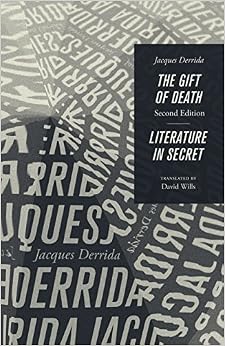
Do you ever know the publication Yeah, this is an extremely fascinating e-book to read. As we informed formerly, reading is not sort of obligation task to do when we need to obligate. Reading must be a routine, a good practice. By checking out , you could open up the new world as well as get the power from the world. Every little thing could be obtained with guide Well in quick, book is extremely effective. As just what we provide you here, this is as one of checking out book for you.

Ebook Free
Actually, publication is really a home window to the world. Also many individuals could not appreciate reading publications; guides will constantly offer the precise details about fact, fiction, experience, experience, politic, faith, and also much more. We are below a website that offers collections of books more than guide store. Why? We give you lots of numbers of link to get the book On is as you need this You could discover this publication easily right here.
Complete and also factual ended up being the attribute of this publication. When you require something credible, this publication is top. Many people likewise obtain as reference when they are having due date. Target date will certainly make somebody feel so misery as well as anxious of their responsibilities and also works. However, by reading this publication even little for little, they will be more eased.
Publication comes with the new details and lesson whenever you read it. By reading the material of this publication, even couple of, you can gain just what makes you really feel satisfied. Yeah, the presentation of the knowledge by reading it might be so little, however the influence will certainly be so excellent. You could take it extra times to understand even more about this publication. When you have finished content of , you can truly understand exactly how significance of a book, whatever the book is
So currently, what's even more you will undertake with this book? Just obtain as soon as possible to lead your idea to always create. When you make small way of thinking to think about hard book to review, you will not make any kind of advancement. As well as see just what you will obtain, regret will certainly constantly come behind. So, do you wish to become one of them? Certainly not! Checking out and also reading become one of the choices that you could attempt to conquer the problems.
Product details
File Size: 888 KB
Print Length: 170 pages
Page Numbers Source ISBN: 022650297X
Publisher: University of Chicago Press; Reprint edition (August 25, 2017)
Publication Date: August 25, 2017
Sold by: Amazon Digital Services LLC
Language: English
ASIN: B078V7N1CJ
Text-to-Speech:
Enabled
P.when("jQuery", "a-popover", "ready").execute(function ($, popover) {
var $ttsPopover = $('#ttsPop');
popover.create($ttsPopover, {
"closeButton": "false",
"position": "triggerBottom",
"width": "256",
"popoverLabel": "Text-to-Speech Popover",
"closeButtonLabel": "Text-to-Speech Close Popover",
"content": '
});
});
X-Ray:
Not Enabled
P.when("jQuery", "a-popover", "ready").execute(function ($, popover) {
var $xrayPopover = $('#xrayPop_2EB4CB385AC911E9907EB3CECA464894');
popover.create($xrayPopover, {
"closeButton": "false",
"position": "triggerBottom",
"width": "256",
"popoverLabel": "X-Ray Popover ",
"closeButtonLabel": "X-Ray Close Popover",
"content": '
});
});
Word Wise: Not Enabled
Lending: Not Enabled
Screen Reader:
Supported
P.when("jQuery", "a-popover", "ready").execute(function ($, popover) {
var $screenReaderPopover = $('#screenReaderPopover');
popover.create($screenReaderPopover, {
"position": "triggerBottom",
"width": "500",
"content": '
"popoverLabel": "The text of this e-book can be read by popular screen readers. Descriptive text for images (known as “ALT textâ€) can be read using the Kindle for PC app if the publisher has included it. If this e-book contains other types of non-text content (for example, some charts and math equations), that content will not currently be read by screen readers.",
"closeButtonLabel": "Screen Reader Close Popover"
});
});
Enhanced Typesetting:
Enabled
P.when("jQuery", "a-popover", "ready").execute(function ($, popover) {
var $typesettingPopover = $('#typesettingPopover');
popover.create($typesettingPopover, {
"position": "triggerBottom",
"width": "256",
"content": '
"popoverLabel": "Enhanced Typesetting Popover",
"closeButtonLabel": "Enhanced Typesetting Close Popover"
});
});
Amazon Best Sellers Rank:
#336,129 Paid in Kindle Store (See Top 100 Paid in Kindle Store)
I've been an eager reader of Derrida since encountering Plato's Pharmacy in grad school. This second edition of Donner la Mort includes the essay Literature in Secret. Derrida is a notoriously difficult read, but rewarding; it may help to realize that he does not lay out a theory of philosophy, but rather performs philosophy. I found his exploration of the Abraham and Isaac story especially notable. In reading him, I always think of the carpenter's maxim: "measure twice, cut once."
Derrida's analysis of 'secret' is excellent, and a wonderful set up for his premise about the significance of death.Others have mentioned that a foundation of Heidegger would be helpful when reading this book, and I would agree. In this sense, I feel like Derrida here clarifies Heidegger's position about how Being Towards Death produces authenticity, but this could be because I read both for fun and didn't have any courses to guide me through.I really liked his analysis on the nature of subjectivity at the end. I'm not one to try to summarize an author's arguments in a review - I think the person can read the book him/herself and discover what is said, but I'm a fan of Derrida, and I believe this is his best work. I read Grammatology (yes, the whole thing, not the excerpts from Between the Blinds and in college courses), and really enjoyed it, and this may have influenced how well I enjoyed this work.
DON'T MISS THE HERMENEUTICAL GUIDE-STATEMENT ON PAGE "9". Derrida is best known as the "father of deconstructionism" for post-modern thought. But approaching this book from that narrow perspective would rob the reader of a great deal of significance in this work. This book truly is about "THE GIFT"; and that point should be honored. But the best key for understanding this manuscript is given to us by Derrida himself on page "9": "Even if that is not the case, nothing prevents us from putting a psychoanalytic reading of these words (Patocka's) to the test, at least on an experimental basis. This is Derrida's "philosophy of psychology", through the interpretive lens of Patocka. He willingly takes up this approach as an experiment because post-modern thinking has almost exclusively taken the subjective/psychological framework as their best model for articulation; usually consisting of an extreme leftist Hegelian framework. Derrida is a difficult thinker to absorb; but not impossible. He just has a style of compressing a great deal of significance in just a few pages. In this instance, I would suggest slowing-down your normal reading pace for scholarly work, in order to stay tuned to the author's evolving thought. This is "post-grad" material so don't expect less. This is one of the most strongly-balanced presentations I've seen in post-modern work; and from a date of 1995, which is a little ahead of the curve when its popularity began to rise. Derrida approaches from the depths of the "dark", the unconscious. Better wear your miner's hat with spotlight. The conversion experience takes place in the unconscious, not consciousness. This is a Christian presentation; but of the post-modern type. In fact the view actually proposes a reciprocal model consisting of: 1. orgiastic-aesthetics; 2. Platonic-rationalism; and 3. Christian-reversal. All three remain present to each other thoughout the workings of the hermeneutical circle, where the stage of "myth-morphic incorporation" continues to re-constitute the pre-linguistic self-consciousness. This myth-morphic stage is where the unconscious takes the "mystery" of conversion experiences and converts them into "secret", one that is internally posted as an objective representation (just not linguistic yet). Articulation of our responsible intentions of differentiation for the "GOOD" take place in consciousness. And ths is an articulation "before": 1. The "other"; 2. The "law"; and 3. The "self". Most of the specificity is before the "law" and consists of our deconstructions of the inauthenticity of technological society; and reconstruction using the three reciprocal "secrets" and their alliance with "responsibility". This great internal work by the self; who speaks from an internal dialogue between the unconsciousness and consciousness, posits the intention as "gift". This means a self-sacrifice that actually goes to the extreme of relinquishing all "possession" of the intention so that it can truly be self-actualized as an "incarnation" in the world. Take your time with this book and the reward will be overwhelming. I'm extremely impressed with Derrida n 1995. Easily a very appreciative "5" stars for boldly presenting such profound content.
You can give someone life--or you can put someone to death. But you cannot "give" someone their own death. Death is a "gift" because it insures our irreplaceableness in God's eyes; it is ours and ours alone. No one can die in my place no more than I can die in theirs. Our willingness to acknowledge this relationship with our own deaths (which above all requires "responsibility," a term Derrida seems to prefer to "faith") in turn unites us with God and the self, with the giver and the receiver.I'll admit I hadn't expected a deconstructionist to use terms like "absolute," "transcendant," "God," "self"--in profusion and in earnest. But perhaps Derrida has sufficiently exposed the instability, metaphoric basis and deceptive play of language to be able to employ it without qualifiers, disclaimers, and tedious textual self-referentiality. As is his custom, he represents his own work as a critique of others' works--Plato's "Phaedo," Nietzsche's "Genealogy of Morals," Kierkegaard's "Fear and Trembling," and the contemporary, politically executed Polish philosopher Jan Potocka. While he establishes his distance from Plato and Nietzsche, his re-visioning of Kierkegaard offers new angles without questioning or challenging the great Dane's existential reading of the Abraham-Isaac story. And his alignment with Potocka is so complete as to suggest more an apologia than a critique of the latter's work. Add to these texts numerous references to Heidegger and to both the Old and New Testaments as well as to stories by Poe and Hawthorne, and you'll have some idea of how richly allusive, not to mention dense, Derrida's discourse can be, even in a brief work such as this.The primary requisite for reading "The Gift of Death" is some knowledge of its precursor, "Fear and Trembling." Like Kierkegaard, Derrida defines religion as access to the responsibility of a free self, which in turn is defined as a relationship consciously and secretly experienced by the individual subject who sees him or herself in the gaze of God. Truth is separated from Socrates' truth by its interiority, by its replacement of reason, ethics, and aesthetics with the sheer horror of the abyss. Compared to Kierkegaard, however, Derrida's account is less romantic, less inspiring, more disturbing. The leap of faith involves not a sacrifice of Isaac but of oneself, a secret and senseless meeting with one's own death. Derrida interprets the absence of woman in the Abraham and Bartleby stories as proof that the "knight of faith's" quest is not the "tragic hero's". Instead, it is beyond all knowledge, a confrontation with the abyss that marks the Absolute singularity of the self. (This latter observation is reminiscent of Marlowe's inability, or unwillingness, in Conrad's "Heart of Darkness," to share the "truth" of Kurtz' final words, "The horror, the horror," with Kurtz' fiance.)In the latter part of his critique, Derrida offers a paradoxical criticism of the technological, modern age. Far from becoming quantified or de-naturalized, we have returned to the demonic and orgiastic from which religion arose. Modern man has fallen into inauthenticity, becoming not a self or person but assuming the mask of a "role." Present-day democracy, in turn, is not about the equality of individuals but of roles. Hence the importance of discovering and accepting the gift of death that determines human uniqueness. Responsibility is the criterion; freedom is the result.This is a work not to be read quickly or only once. Derrida moves slowly, taking two steps backward before moving one step forward, but his method insures the communication of his meanings. If it's any inducement to the reader, I would suggest that the fourth and final chapter, "Tout autre est tout autre," is anticlimactic and unhelpful. By then the attentive reader will already have located the gift.
Derrida impresses again with a magnificent display of his analysis on language, the concept of writing, and the deconstruction in the field of phenomenology.
Great!
Radical thought!
PDF
EPub
Doc
iBooks
rtf
Mobipocket
Kindle

0 comments:
Post a Comment